Lars Baron/Getty Images
When is racing not racing? F1's new regulations deliver a split verdict
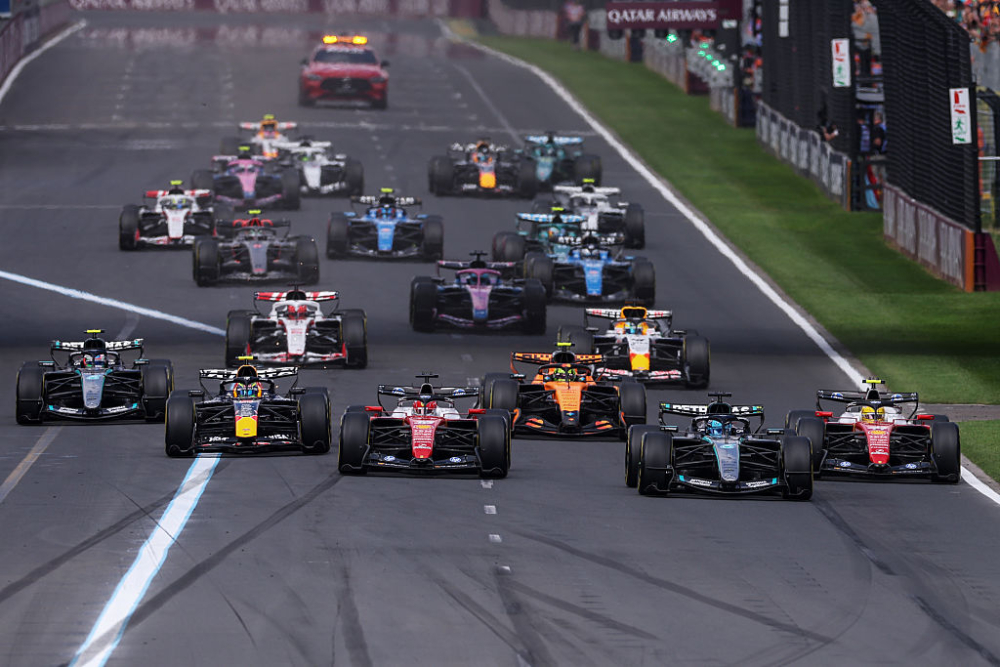
There was a significant amount of trepidation in the Formula 1 paddock arriving at Albert Park on race day. I was certainly feeling it, anyway, because there were serious unknowns over how the racing was going to play out with the new cars.
The two main schools of thought were either drivers and teams would be risk-averse as they sought crucial data to help understand the new regulations, and overtaking might be difficult, or it would be a chaotic race with drivers passing and re-passing each other often.
Fortunately, the latter was true. And I say fortunately, because if there had been little in the way of action in the race after the glaring shortfalls of qualifying, then F1 could have been in an extremely tough position, even if the first race of the new regulations – on a power hungry circuit – was always going to be the low point before the rapid rate of development F1 is famous for kicks in.
Instead, I don’t mind admitting that I was absolutely loving the opening 15 laps of the race. In a media center with no commentary or audio, the images alone of Charles Leclerc and George Russell swapping places for the lead almost continuously were awesome.
It was refreshing to see drivers having to work really hard to get an overtaking move to stick – in the sense of not being re-passed again – and when it’s two different teams scrapping over the win, that only heightens the excitement.
So it was then a little disheartening to hear how split driver views were of the racing, too, because despite the differences in driving styles, you’d hope they would enjoy the competition of having to outfox the other.
“It’s different, it’s definitely different,” race winner Russell said. “But I think the interesting thing with these regs is every track we go to, they’re not always going to be like this. We’re going to Shanghai next where you’ve got one big, long straight, so the majority of drivers will be using their energy on that one straight. You don’t need to divide it up between four like you do here in Melbourne.
“Everyone’s very quick to criticize things. You need to give it a shot. We’re 22 drivers. When we’ve had the best cars and the least tire degradation and when we’ve been happiest, everyone moans the racing’s rubbish. Now drivers aren’t perfectly happy and everyone said it was an amazing race. So, you can’t have it all, and I think we should just give it a chance and see after a few more races.”
Despite his excellent start to take the lead at Turn 1 and then fight with Russell early on, Leclerc was also not particularly effusive of the way the pair had to go about trying to get ahead of the other.
“I think that it will definitely change the way we go about racing and overtaking,” he said. “Before, it was more about who is the bravest at braking the latest. Maybe now there’s a bit more of a strategic mind behind every move you make because every boost button activation, you know you’re going to pay the price big time after that, and so you always try and think multiple steps ahead to try and end up eventually first. But it’s a different way to go about racing for sure.”
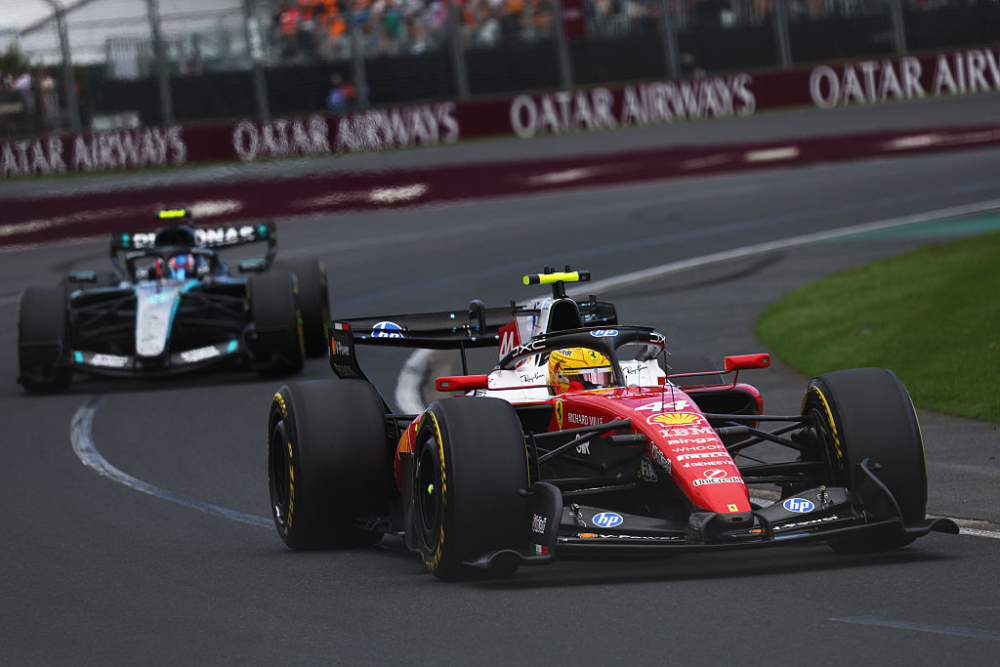
Ferrari's Lewis Hamilton was positive about the new style of racing. Andy Hone/Getty Images
Perhaps a little surprisingly after having a watching brief for much of the lead battle, it was Lewis Hamilton who brought the most positivity among the drivers, having spent latter half of the race pushing to try and close a gap to Leclerc for the podium.
“I personally loved it,” Hamilton said. “I thought the race was really fun to drive. I thought the car was really, really fun to drive. I watched the cars ahead, there was good battling back and forth. So, yeah. So far, so good.
“I thought it was awesome. Again, they’re all from, further down the line, with 20 cars ahead of you, it may seem different, but from my position I thought it was great.”
But plenty of critics remained, both in the cockpit and on the pit wall. McLaren team principal Andrea Stella was not totally convinced by the style of overtaking, even if he had enjoyed it at the time.
“It was definitely exciting at the start of the race when we had the overtaking in particular between Mercedes and Ferrari,” he added. “For me this still looks like a little bit of an artifact. It's an overtaking which has to do with how we are using the battery.
“Actually when the pace settles and everyone is on the same pattern from a deployment schedule point of view, then I think that overtaking becomes difficult. So I think even from an overtaking point of view, this is something that we need to keep reviewing.”
Whether so much overtaking would have continued throughout the race had Ferrari kept its drivers on the same strategy as Mercedes is up for debate. But with a big gap back to Lando Norris and Max Verstappen, both retained strong stances against the new cars.
Norris’ comments from earlier in the weekend – when he said “we've come from the best cars ever made in Formula 1 and the nicest to drive to probably the worst” – drew a response from Russell, who pointed out very few drivers were particular fans of the previous generation of car.
“If he was winning, I don’t think he’d be saying the same,” is a fair point from the driver who is winning, and naturally more inclined to look upon the new regulations more positively. But Norris’ safety concerns do need listening to, whether the racing was exciting for fans or not.
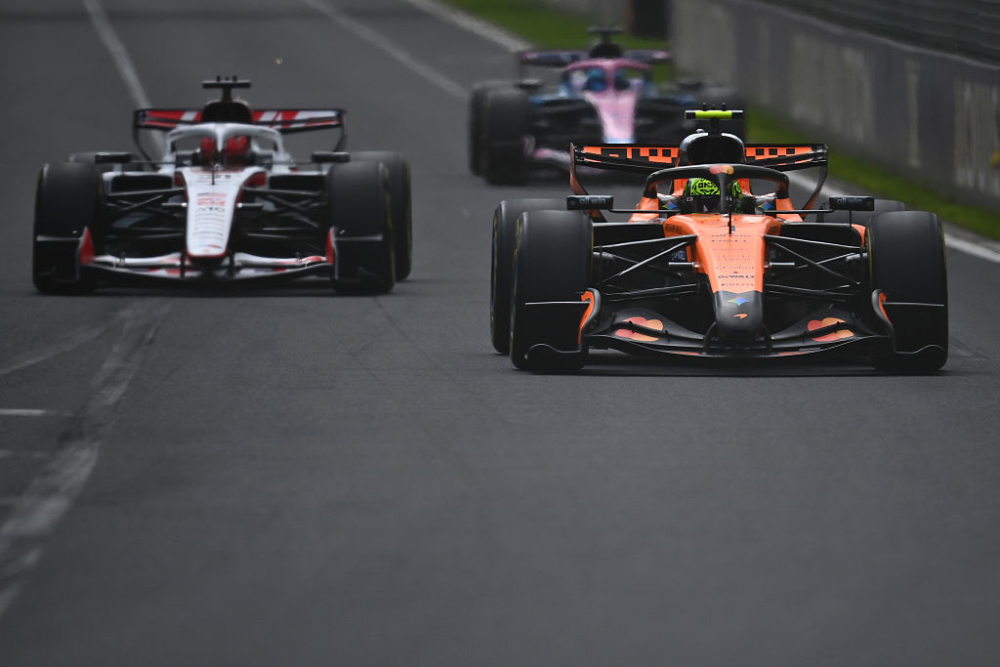
Norris said there was "way too much" artificial overtaking. James Sutton - Formula 1/Formula 1 via Getty Images
“Way too much [artificial overtaking],” Norris said. “It’s chaos, you’re going to have a big accident, which is a shame that you’re kind of driving and we’re the ones just waiting for something to happen and go quite horribly wrong, and it’s not a nice position to be in, but there’s nothing we can really do about that now.
“So it’s a shame, it’s very artificial, depending on what the power unit decides to do and randomly does at times, you just get overtaken by five cars or you can just do nothing about it sometimes. There’s nothing we can change about it so there’s no point saying any more, but it’s not for me.
“Just depending on what people do you can have 30, 40, 50kph speed [differences] so when someone hits someone at that speed you’re going to fly and you’re going to go over the fence and you’re going to do a lot of damage to yourself and maybe to others, and that’s a pretty horrible thing to think about.”
Suggestions that the overtaking is artificial potentially loses sight of the fact that a race is who can get to the end the fastest, and beating other cars to the finish line can take on many forms.
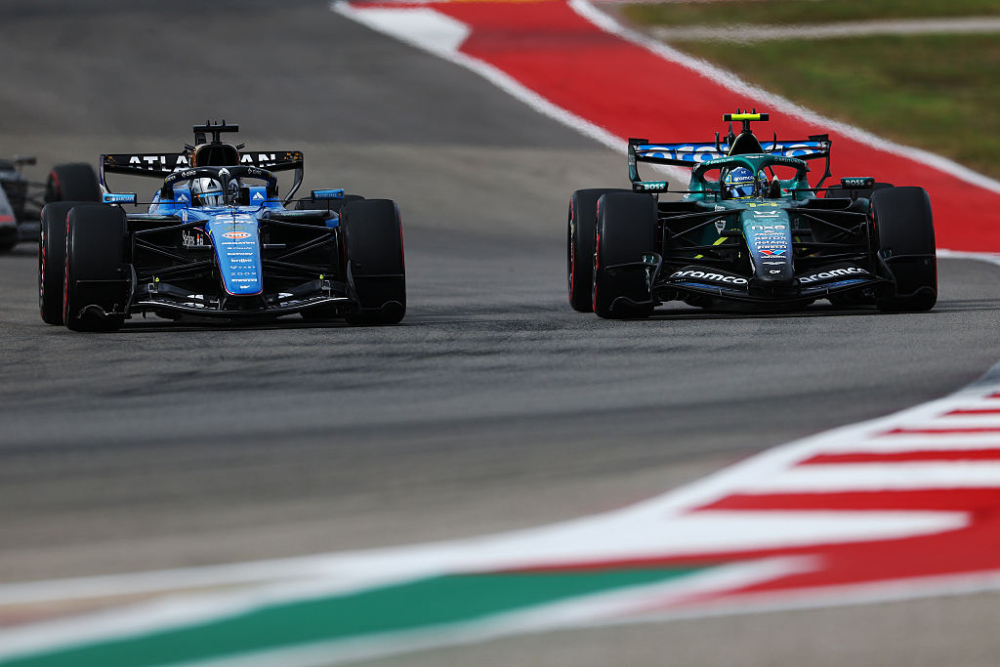
We’ve had eras where tire performance differences facilitate easy moves, or DRS activation. Cars always have some aspect that creates a differential and leads to the chance of overtaking, and outbraking someone remains a possibility, with plenty of more traditional moves seen among the additional passes.
And a past comment from Jenson Button when he was racing in F1 always sticks with me, after he pointed out that the drivers are the last people to listen to in terms of making their jobs enjoyable. High downforce, lots of power and lots of grip are a blast behind the wheel, but not conducive to good racing.
While specific driver comments can have a big influence on fan perception, it is the fans that matter the most. You’ll never create something that everybody is happy with, but the majority need to enjoy what they are watching.
The fan in me certainly enjoyed seeing cars yo-yoing rather than following in a procession, and trying to find different ways to break that rope. What has led to that situation is not always clear at the time, and in Shanghai we might see a totally different style of race, but for me the priorities are the driver has to make a difference when competing wheel-to-wheel with another driver, and the fastest combination has the best chance of winning.
If a driver is choosing how much power to use and when – whether that’s to make an overtake or to not defend against one and wait to counter – they’re making the difference in my book.
It’s still racing, just of a different kind. And it will evolve. F1 and the FIA are open to changes and listening to feedback, but while it should be the drivers who are prioritized for matters of a safety perspective, it is the fans who need to be listened to when it comes to the competition on track.
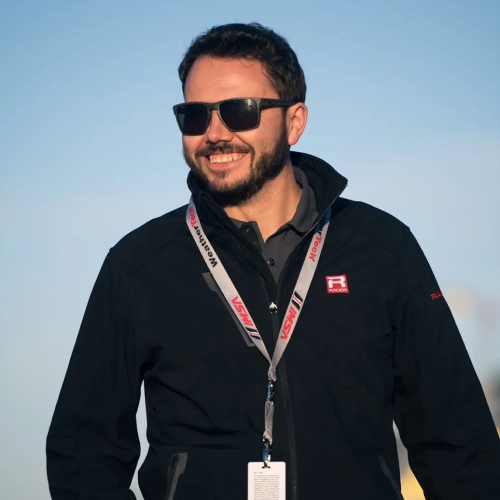
Chris Medland
While studying Sports Journalism at the University of Central Lancashire, Chris managed to talk his way into working at the British Grand Prix in 2008 and was retained for three years before joining ESPN F1 as Assistant Editor. After three further years at ESPN, a spell as F1 Editor at Crash Media Group was followed by the major task of launching F1i.com’s English-language website and running it as Editor. Present at every race since the start of 2014, he has continued building his freelance portfolio, working with international titles. As well as writing for RACER, his broadcast work includes television appearances on F1 TV and as a presenter and reporter on North America's live radio coverage on SiriusXM.
Read Chris Medland's articles
Latest News
Comments
Comments are disabled until you accept Social Networking Cookies. Update cookie preferences
If the dialog doesn't appear, ad-blockers are often the cause; try disabling yours or see our Social Features Support.